Rodent control and exclusion
Close the way in first, then deal with what is already inside
Rodent control, exclusion and removal, plus live trapping for the wildlife that needs moving rather than killing.
Chapter 01
Sealing the way in comes before taking anything out
Removal on its own is a service you buy again. If the gap is still open when the last rodent leaves, the building is simply waiting for the next one, and the call comes back in a season.
So exclusion leads. Find how they are getting in, close it, and then deal with what is already inside. Rodent control, rodent exclusion and rodent removal are listed separately because they are separate pieces of work, but the order they are done in is what decides whether the problem is finished.
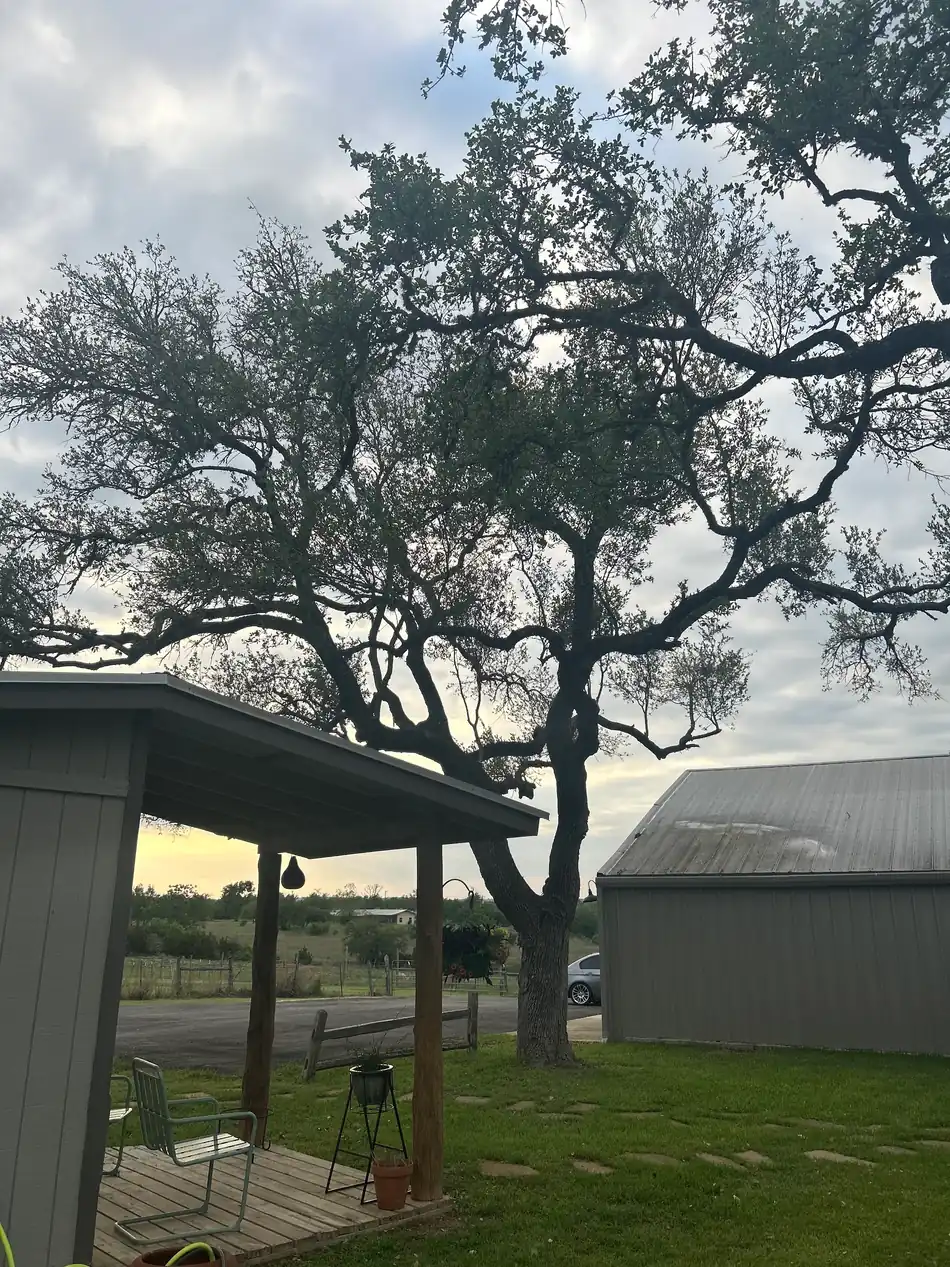
An outbuilding, oak and gravel drive at dusk on a rural Central Texas property
Where a Hill Country build actually lets them in
Entry points are rarely dramatic. Weep holes, the gap where a pipe or a cable passes through a wall, a soffit corner that has lifted, the run where a roofline meets an older addition, and the space under a door that has dropped a quarter of an inch since it was hung.
Outbuildings, sheds and anything standing on its own on the property are worth walking too. They are the staging ground. Something living behind a tank or in a shed is a short walk from the house, and finding it there is cheaper than finding it in your attic.
Chapter 03
Wildlife, and why the trap is a live one
Not everything that turns up in a Central Texas yard is a rodent, and not everything that turns up should be poisoned. Wildlife live trapping is the answer for the animals that need moving rather than killing.
A live trap also avoids the second problem with poison, which is an animal that dies somewhere inside a wall cavity you then have to open. Trapping keeps the outcome where you can see it.
Austin Excel, Licensed and insured. Texas Department of Agriculture pest-control license TPCL #786979. Call (737) 201-3059.