Lawn care and fertilization
Thick turf is built underneath, in the order the year happens
Weed control, nutrient feedings, turf management and the annual fire ant treatment, planned around the grade rather than the calendar.
Chapter 01
Read the grade before you feed the grass
A lawn that will not hold is usually not a feeding problem. It is water sitting where it should be moving, or running off before it soaks. The low corner that stays soft, the strip beside the drive that burns out first, the bed that drains into the turf instead of away from it.
Getting the grade and the drainage understood first is what makes everything after it worth paying for. Feeding a lawn that is drowning at one end and starving at the other just makes the difference more obvious.
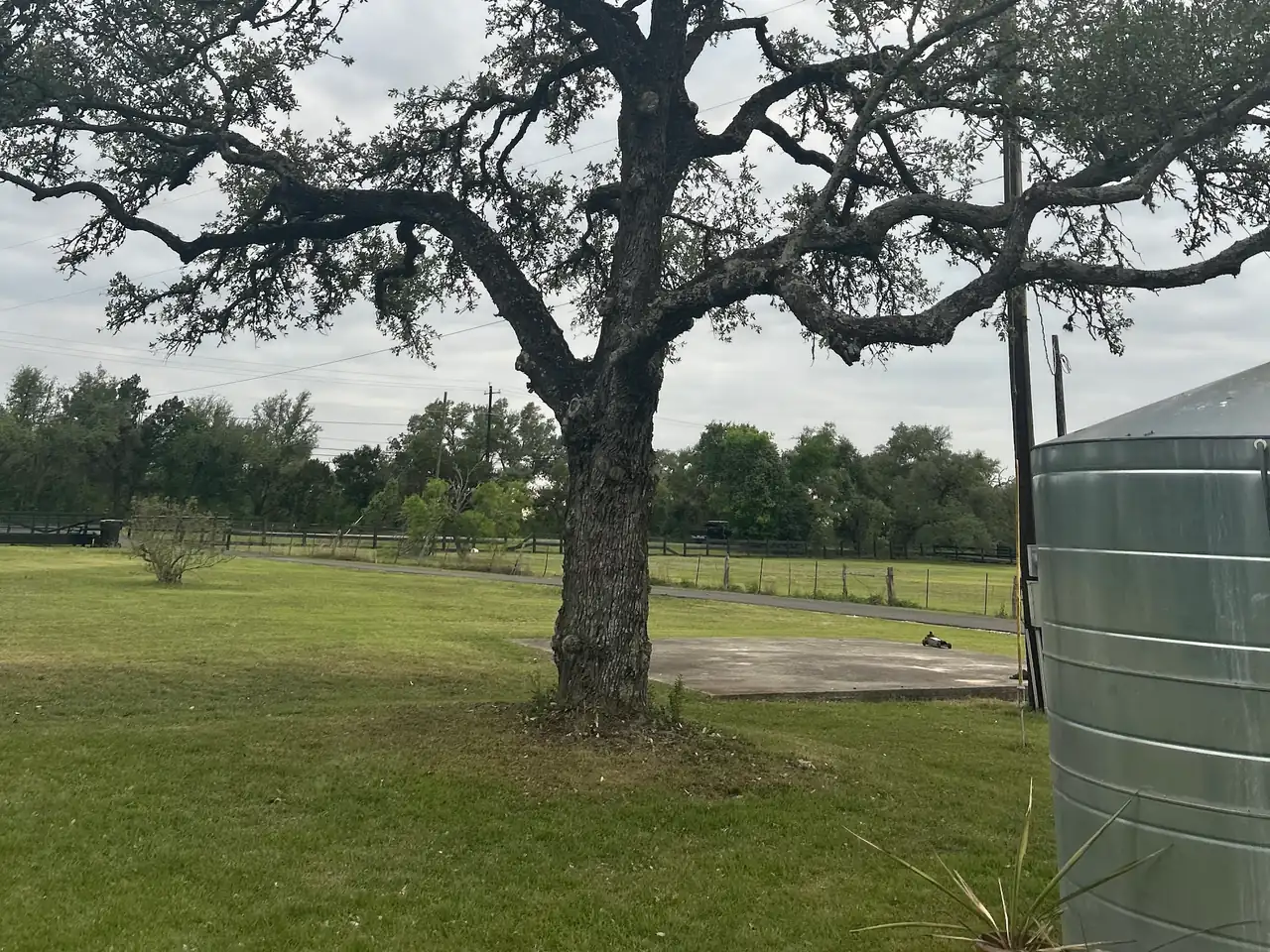
Mown turf running to a fence line under a mature live oak near Buda
Weed pressure and feeding across a Texas year
Weed control and fertilization are the same schedule seen from two sides. Preventing the invasive growth before it establishes is a different job from eliminating what has already taken hold, and they do not happen in the same month.
The feeding is aimed at the root system rather than the color. Thick turf is what keeps weeds out next year, so the nutrient feedings are about building something that competes on its own rather than producing a green that fades by August.
Chapter 03
Fire ants, timed to the mound
The annual fire ant treatment is on the calendar, but the calendar is a starting point. Mounds move after rain and after disturbance, and a treatment that goes down where the mound was last month does very little.
Walking the property before the treatment is the part that makes it work. It is also the visit where anything else that has changed on the lawn gets noticed, which is usually cheaper to deal with than it will be in three months.
Turf management as an ongoing record, not a one off
This side of the business has run under the Research Turf Management name alongside the pest work for many years, and customers describe using both together for more than a decade.
What that looks like in practice is a property with a history: what was fed and when, which corner always struggles, what the last dry summer did to it. That record is the difference between maintenance and guesswork.
Austin Excel, Licensed and insured. Texas Department of Agriculture pest-control license TPCL #786979. Call (737) 201-3059.