Getting a live oak through a Texas drought without cutting it wrong
The most valuable thing in a Hill Country yard is also the easiest to damage with well meant work.
September 7, 2026 · 3 min read
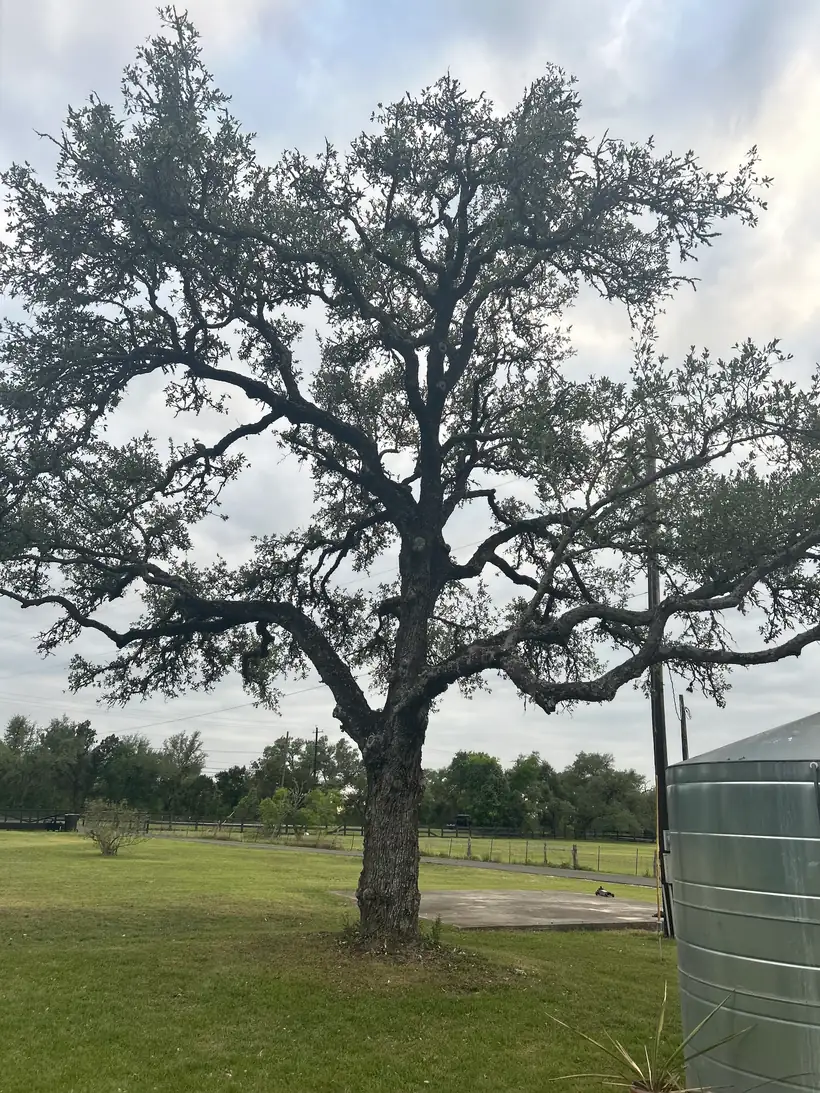
After a hard summer, the instinct is to do something. The oak looks thin, there is deadwood in it that was not obvious before, and tidying it up feels like help.
This is the point at which a lot of good Central Texas trees get damaged, and the damage is quiet enough that nobody connects it to the work for a couple of years.
Why a stressed tree cannot afford a big cut
A tree pays for wound response and new growth out of stored reserves. A tree that has just spent a long dry summer keeping itself alive has spent a large part of those reserves already.
Take a lot of live canopy off in that state and you have done two things at once. You have removed some of the leaf area it needs to rebuild reserves, and you have handed it a set of wounds to seal using reserves it does not have. The tree does not die, which is exactly why the mistake goes unnoticed. It just declines slowly.
The same reasoning applies after a hard freeze. Damage is often not fully expressed for months, so cutting early means cutting on incomplete information, and usually cutting more than needed.
The answer is frequently not yet
This is the part that sounds like avoidance and is actually the skill. Knowing which month a cut belongs in, and being willing to tell a customer that the right thing is to wait, is most of what separates tree care from tree cutting.
With live oaks specifically, timing is not only about the tree's own reserves. There are well established seasonal reasons in this region for being careful about when oak wounds are made at all, which is why reputable people here talk about oak work in terms of the season rather than the convenience of the diary.
The practical version for a homeowner: if somebody offers to do substantial work on your live oak at a time of year when nobody else in the area is doing it, ask why.
What is worth doing, and in what order
Not everything waits. There is a real difference between structural or safety work and cosmetic tidying.
- Deadwood comes out because it is the part that falls, and it falls on cars, roofs and people
- Limbs in contact with a roofline get dealt with, because they are also a rodent route
- Anything genuinely hazardous is a safety decision, not a horticultural one
- Thinning for light is worth doing, but staged across more than one visit on a stressed tree
- Cosmetic shaping waits, and on a drought stressed tree it waits a good while
On a tree that has been through a rough year, less is taken and it is taken over more than one visit. That is slower and it is more visits, and it is the approach that leaves you with the tree.
The lawn underneath is part of the same question
The patch of grass under a big oak that will not take is one of the most common lawn complaints in this part of Texas, and it is very often not a lawn problem.
A canopy that has closed over completely means that grass has not had usable light in a long time, and no amount of feeding fixes a light problem. The actual answer is a considered thinning of the canopy, done at the right time, which lets light through without asking too much of the tree.
It works the other way too. Heavy irrigation aimed at rescuing that patch of grass puts water at the base of a tree adapted to going dry, which is its own slow problem. The two decisions have to be made together, by somebody looking at both.
What to watch for over the next year
Thinning that appears at the top and outer edges of the canopy first, dead tips on small branches, and leaf out in spring that is noticeably later or patchier than the same tree in previous years are all worth reporting rather than watching.
None of them means the tree is finished. They mean the tree is telling you what kind of year it had, and that is the information a decision about cutting should be based on rather than how it looks from the kitchen window in September.
Austin Excel Pest & Lawn Control, (737) 201-3059
Call (737) 201-3059More articles
Scorpions in a Buda house: where they get in and what actually changes it
The scorpion in your bathroom did not come from nowhere. It came from about four feet away, through a gap you can find.
Why the same crew should be looking at your lawn and your bugs
Two companies on one property will each solve their half correctly and still leave you with the problem.