Fire ants in Central Texas: why timing beats product
A treatment placed where the mound was last month does very little, and that is the usual reason people think it did not work.
September 7, 2026 · 3 min read
Fire ants are the one pest most Central Texas households have direct physical experience of. Everybody knows what the mound looks like and everybody knows what happens if you stand on it. So the treatment is one of the few that gets judged on results within days.
That judgement is usually about timing and placement rather than about what was applied, and understanding why is genuinely useful when you are deciding what to book.
A mound is not a fixed address
The visible mound is the part above ground, and it is the least permanent part of the colony. Heavy rain will push a colony to relocate. Disturbance will do it. Mowing over a mound repeatedly will do it. The colony moves, sometimes only a few feet, and rebuilds.
This is why an annual treatment that was scheduled purely by date can miss. If the property was walked in March and treated in May, some of what was treated is ground the ants have already left.
The fix is not complicated. Walk the property immediately before treating rather than weeks before, and place against what is there on the day. It costs an extra pass around the yard and it is the single largest factor in whether the treatment holds.
Where they set up, and why it is predictable
Fire ants want warmth, moisture and undisturbed ground. On a typical property that combination sits in a small number of places, and once you know them you can find most of the mounds yourself.
- Along the sunny side of a driveway or path, where the concrete holds heat
- Beside sprinkler heads and anywhere a zone throws slightly long and keeps the ground damp
- Against fence lines and under the bottom rail, which never gets mown or walked
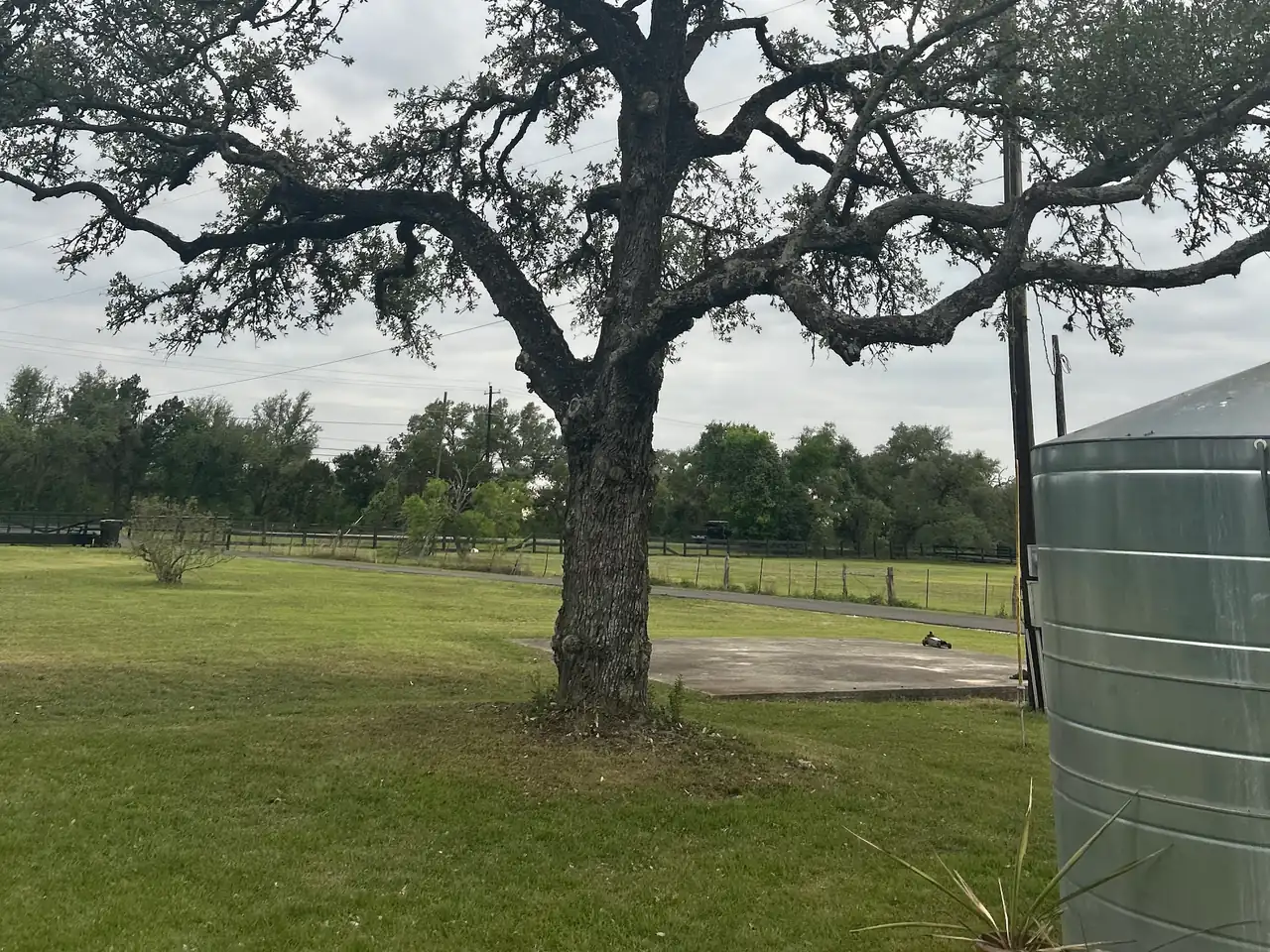
- Around the base of anything standing on the ground, from a tank to a shed to a stack of pavers
- In the strip between a bed and the turf, which is disturbed least often
- At the edge of a low spot that stays soft after rain, but not in the wet part itself
The pattern behind all of those is edges. Fire ants set up where two things meet, because that is where the ground is warm on one side, moist on the other and rarely disturbed.
Why the whole yard gets attention, not just the mounds
Treating only the mounds you can see is treating the symptom you noticed. A colony that is relocating, or a new one establishing, has no visible mound yet, and those are the ones that produce the sting in August that makes you think the treatment failed.
So a proper annual treatment covers the ground rather than the mound count, with the located mounds getting specific attention on top. The broad coverage is what deals with the colonies you have not found and the ones that have not arrived yet.
There is a related reason not to attack individual mounds yourself in the days before a scheduled treatment. Disturbing a colony without finishing it is one of the more reliable ways to make it relocate, which turns a mound somebody had found into a mound nobody has. If you have a treatment booked, mark the mounds and leave them alone rather than pouring something on them the weekend before.
What to expect afterwards
The honest answer is that fire ants are managed rather than eliminated. Central Texas has a continuous supply of them, and a property that borders open ground, a field or a road verge will receive new colonies regardless of what happens inside your fence.
What a good annual treatment buys is a yard you can walk barefoot in and children can play in, with the population kept far enough down that it does not rebuild to where it started. Judged against elimination it will always look like a failure. Judged against what it is actually for, it is one of the more reliable things you can do to a Texas lawn.
Working around pets and children
Tell whoever is treating your property that there are animals and children, and ask directly what the day looks like: how long before the lawn is used normally again, whether water bowls need bringing in, whether anything changes about where the dog goes.
You should get a clear, specific answer rather than a reassurance. A company that treats family lawns should have thought this through long before you asked, and should be planning the visit around it as a matter of course.
Austin Excel Pest & Lawn Control, (737) 201-3059
Call (737) 201-3059More articles
Scorpions in a Buda house: where they get in and what actually changes it
The scorpion in your bathroom did not come from nowhere. It came from about four feet away, through a gap you can find.
Why the same crew should be looking at your lawn and your bugs
Two companies on one property will each solve their half correctly and still leave you with the problem.