What Blackland clay does to a slab, and why termite inspections start low
Most of what matters on a termite call is found in the first eighteen inches above and below grade.
September 7, 2026 · 3 min read
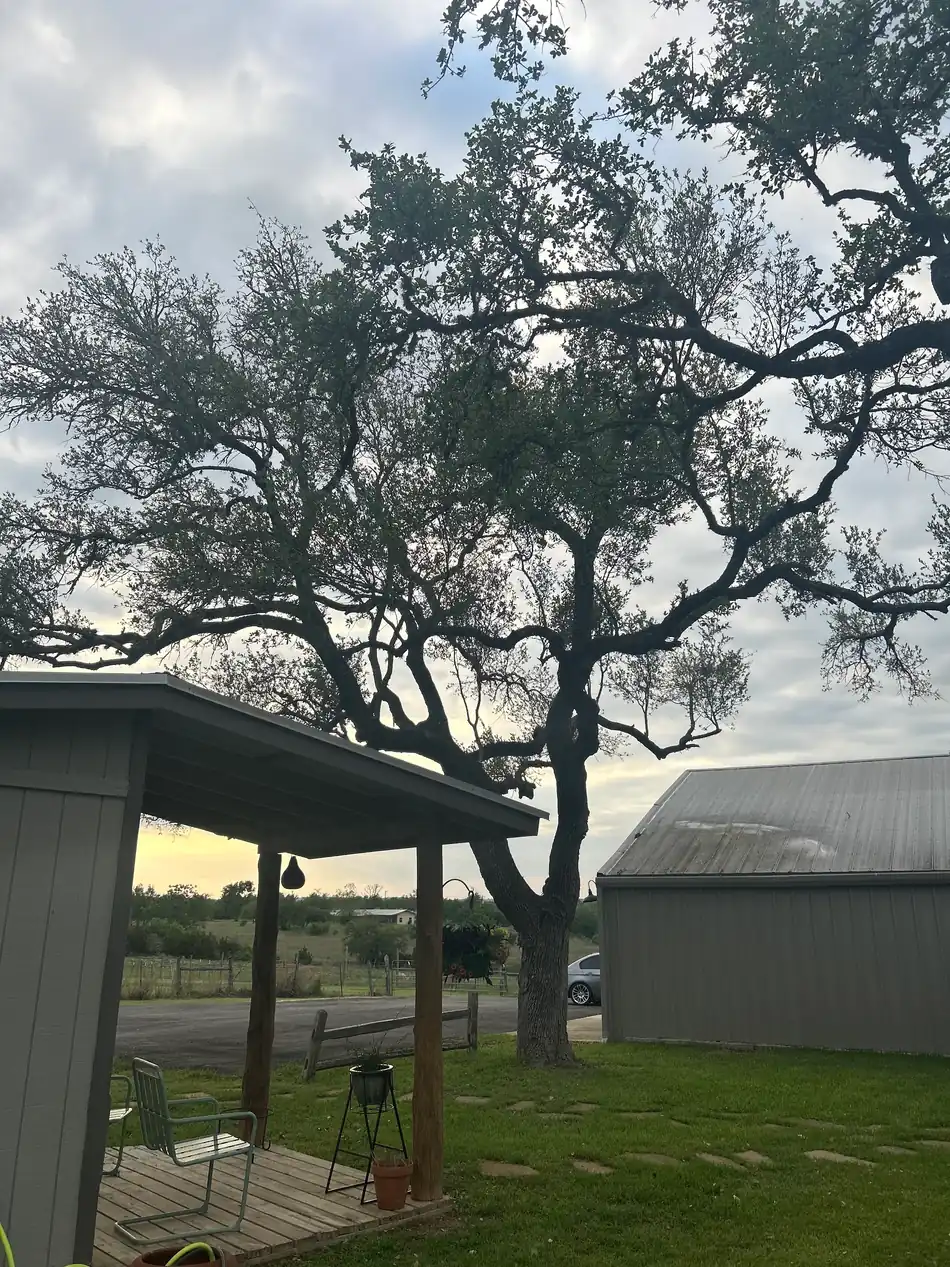
If you have owned a house around Buda for a few years, you have watched the ground do it. In a wet spell the soil swells and the cracks close up. In a long dry summer it shrinks away and you can drop a tape measure into a gap beside the slab.
That movement is the background condition for everything about termite work here, and it explains why a genuine inspection looks so different from what people expect.
Why the movement matters
Blackland clay is a shrink and swell soil. It changes volume significantly with moisture, and it does it season after season. A concrete slab sitting on top of that does not move uniformly with it, so the joint between the two opens and closes.
Termites are looking for a route from soil to timber that stays humid and out of the light. A seasonal gap along a slab edge, an expansion joint, or a hairline crack running under a wall is close to ideal, and none of it is visible from standing height.
It is also why the situation is not static. A house that inspected clean three years ago has been through several cycles of the ground opening and closing since, and the routes available now are not the routes that were available then.
What a real inspection looks like
It is slow, it is uncomfortable, and most of it happens crouched or kneeling. The inspector should be at the ground line working around the structure, not walking the rooms.
- The full perimeter at the slab edge, looking at joints, cracks and the soil line against the concrete
- Anywhere soil, mulch or a raised bed has been built up against the structure, which hides the slab edge entirely
- Timber in contact with or close to the ground: fence posts against the house, deck framing, door frames at the bottom
- Plumbing penetrations, where a permanently slightly damp route runs from outside to inside
- The garage, which is often where the slab edge is genuinely visible and where evidence turns up first
- Any addition, because the join between an older slab and a newer one is a joint by definition
If somebody spends fifteen minutes at your property and does most of it upright, you have had a look rather than an inspection.
It is also worth knowing what the inspector cannot see, because that shapes what a clean result actually means. Timber inside a wall cavity, the underside of a slab and anything behind finished surfaces are not directly visible to anybody. What a good inspection does is read the evidence those places leave at the edges, which is precisely why the accessible ground line gets so much of the attention. A report should tell you what was inspected and what was not reachable, and you should expect to be told both.
Inspect first, then treat
The order matters financially. Treating before the extent of the activity is established means paying for coverage that may be in the wrong place, and then paying again when the actual route is found.
The inspection establishes where the activity is, how it is reaching the structure and what it has already got to. The treatment then follows that map. It also means the conversation you have afterwards is about a specific finding rather than a general worry, which is the difference between choosing between options and being sold the most expensive one.
If you are buying, selling or refinancing
A termite inspection in a transaction has a second job. It has to produce documentation that a lender or a buyer will accept, and that paperwork is part of the service rather than an extra you ask for afterwards.
The practical advice is about timing. Tell whoever is inspecting what your closing date is when you book. Scheduling with real room to spare is the difference between a finding you can act on calmly and a finding that arrives with days left and holds up the close.
What you can do between inspections
Keep the slab edge visible. That single habit does more than anything else available to a homeowner. Mulch and soil banked over the concrete hide exactly the band where evidence appears, and they hold moisture against the structure at the same time.
Beyond that: keep timber off the ground, deal with a leaking hose bib or a downspout dumping against the foundation rather than living with it, and pay attention after a long dry summer, because that is when the ground has pulled furthest away and the routes are widest.
Austin Excel Pest & Lawn Control, (737) 201-3059
Call (737) 201-3059More articles
Scorpions in a Buda house: where they get in and what actually changes it
The scorpion in your bathroom did not come from nowhere. It came from about four feet away, through a gap you can find.
Why the same crew should be looking at your lawn and your bugs
Two companies on one property will each solve their half correctly and still leave you with the problem.